
Congrats to the 3 new bodans who tested last night. What was funny as I was typing this, was that autocorrect changed "new bodans", to "newborns". I thought how appropriate that was though; as new bodans enter a very special period where just like newborns, they learn about themselves, get tested, receive so many of the lessons that will help them succeed as black belts. Just like newborns are surrounded by love and support, bodans are also surrounded by the love and support of the community as they make their way to black belt. I was a bodan for 3 1/2 years, it was one of the best periods of my life. I've known people who got their black belt after only a year of being bodan; I've known people who have been bodan for 10-20 years. Black belt will come at the right time for you. One of most important lessons now is giving back to the Dojang and your own community by being generous. Generosity creates more bodans and our lovely community grows 😊 MUDO to our 3 new warriors.

On September 18th at 7:31am, a super chill Luca was born to WMAC Ralph and Moe Maldari. Luca has his mother's patience and nose (Ralph sighs with relief:), but his face is unmistakably dad's! Luca is happy and healthy, and looking forward to training with dad in a few years!

What Do We Really Owe Our Teacher? by WMAC Black Belt Thomas Lamphier

There was a hint of disappointment in Chungsanim Dominick's voice, which surprised me because I think of her as someone who could bat away a disappointment as easily as she'd deflect a left jab. It was after class. We were talking about students we hadn't seen in a long time. The unspoken thought was: many good students leave our school, seemingly without a backward glance. Disappointment hung in the air like a haze for a few moments, then it was gone. But not entirely gone... For it left me with a question: What do we really owe our teacher?
I have an answer—at least my version of an answer. But before getting into it, I want to take a slight detour. Did you know that Chungsanim recently published a terrific book about Jujitsu? It is titled, The Compendium of Kumite Ryu Jujitsu The Student Handbook for the School of Survival. I have found the book very inspirational. It truly reflects the best of martial arts.
Back to my main thread... If you're talking strictly martial arts, the standard answer about what we owe our teacher is respect and duty. Respect is simply an acknowledgment of a person's rank and accomplishments, hence we should always bow properly to our teacher, bring a good attitude to the mat, and listen attentively in class. Duty is our obligation to repay in kind all the encouragement, direction, and training we receive as students. Helping to keep the dojang running smoothly is a great place to start. We should show up on cleaning day, and help out on similar occasions. By doing our part, we can ensure that the dojang is a serene and inviting place—the kind of place where our teacher will feel appreciated.
Respect and duty are important, but they are not the whole story. I believe that what we owe our teacher runs deeper and wider than these two precepts. Perhaps I've been influenced by all the martial arts movies I've seen over the years. Granted, such movies are mainly fiction, but they seem to reflect the spirit and traditions of martial arts. And, to the extent that they do, they are worth looking at for the light they might shed on our question.
One of the common threads in martial arts movies is how a teacher always puts a new student through an ordeal before any serious training begins. In The Karate Kid, for instance, Mr. Miyagi has young Daniel wax cars in the hot sun for about a week before showing him the outside block. And in Kill Bill 2, when Beatrix (Uma Thurman) goes to Pai Mei's mountain camp to study, he lets her know from the outset that he's not running a spa for martial artists. He thrashes her, then puts her to work running buckets of water up and down the mountain, pounding a tree trunk bare-fisted, and other wearisome tasks. As the days go by, she becomes more and more ragged, until she finds that she can't get her fingers around a pair of chopsticks to eat. She grabs for the rice with her hand, but Pai Mei angrily raps her on the knuckles, making it clear that it's either use the chopsticks, or starve. Slowly, grimly she picks up the chopsticks and manages a bite. The flicker of a smile passes over old Pai Mei's face. You realize that she's passed the test. The purpose of these ordeals, as I understand it, is for the student to show that he or she is worthy of being taught.
We have ordeals in the real world too, buy we would more likely call them challenges. One of the early challenges we face as martial artists is to continue coming to the dojang after the euphoria of the first few classes has worn off. And we face numerous challenges along the way: learning new forms and techniques, conditioning ourselves, overcoming injuries, to name a few. We owe it to ourselves—and I think to our teacher too—to face each challenge with the best that we have in us, for that is the true spirit of marital arts.
Another thing I find interesting about the movies is how the student adopts the attitudes and beliefs of the teacher as training progresses. In The Karate Kid, for example, Daniel begins to develop the serene confidence and openness of Mr. Miyagi. And in Kill Bill 2, there's a wonderful scene, shown in silhouette, where Pai Mei and Beatrix are practicing forms together. You can see the joy they share of being in the moment.
In the real world, we students also absorb the attitudes and beliefs of our teacher. Indeed, if we didn't, our learning would be mere technique, without passion or understanding. The attitudes and beliefs that our teacher passes along to us, gives us a context for growing as martial artists, and also enriches our lives beyond martial arts.
Some people seem to miss the boat when it comes to what we really owe our teacher. It's easy to delude yourself into thinking that you are entitled to everything that comes your way, and that giving back is rarely necessary. But, besides being bad for your karma, this view of life will stunt your growth as a martial artist. Whatever you pick up easily will be dropped just as easily. In the long run you won't get very far.
So what are we conscientious students to do? I believe that we must periodically review how we relate to our teacher, and possibly make adjustments. I can't tell anybody what to do, as it's not my place, but I can offer a few thoughts on the subject. One of them is a quote from Imagawa Sadayo, a Japanese poet and military commander from the Fourteenth Century:
It is forbidden that one should, acting disrespectful of The Way of Heaven, attach little importance to duties of his master and be overly attentive to his own business.
I think we should not only help, but also revere our teacher. And there may come a time for us to leave the dojang and move on to another phase in our lives. If, and when that happens, we should stop and thank our teacher. Finally, I would say this:
If you are fortunate to have studied under Sabumnin, Chungsanim, or any of the senior instructors at WMAC, then wherever you go, they will stay with you, for they are the ones who taught you the ABC's of martial arts, and they are your link to the great masters that have come before us.
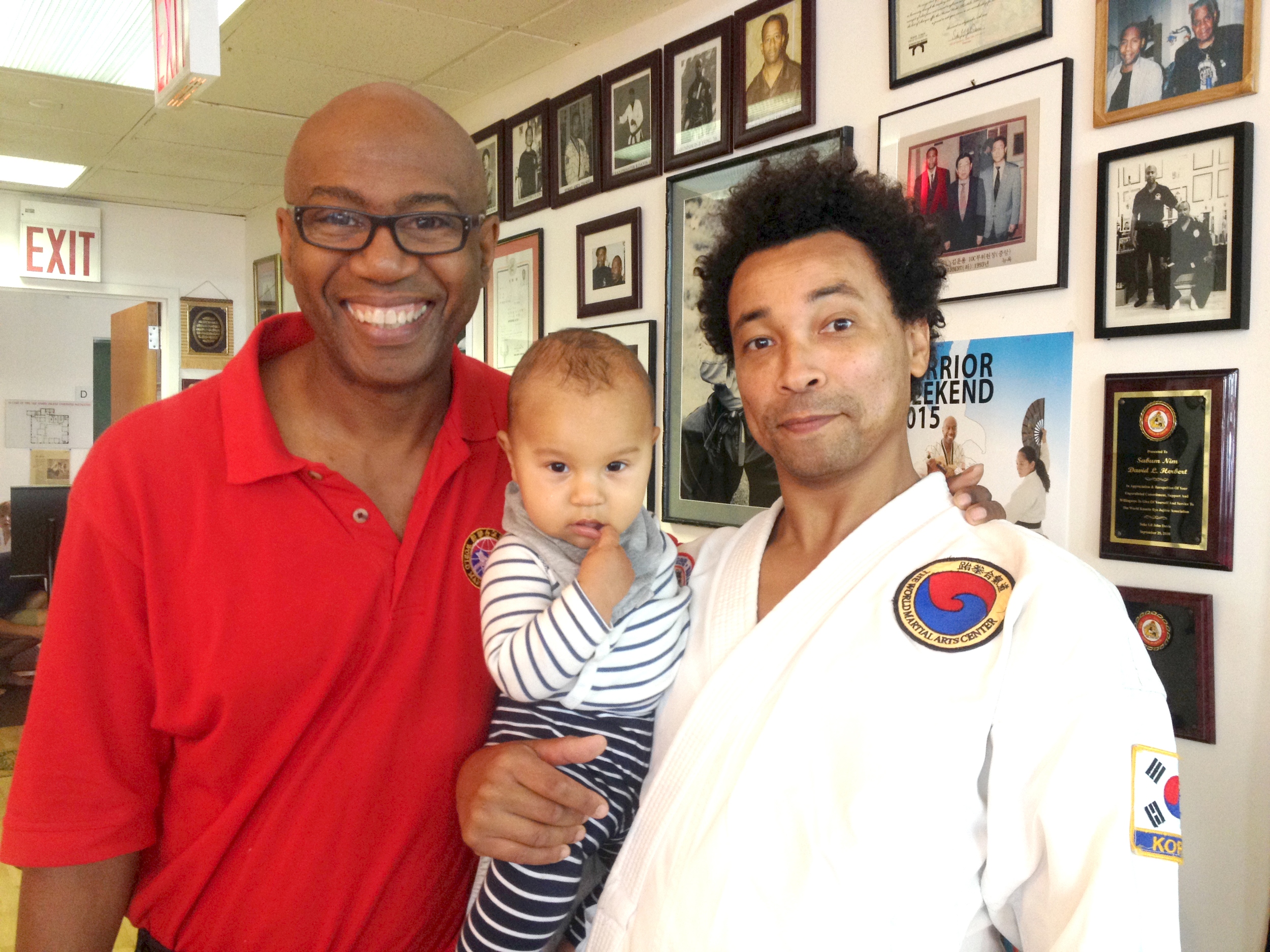
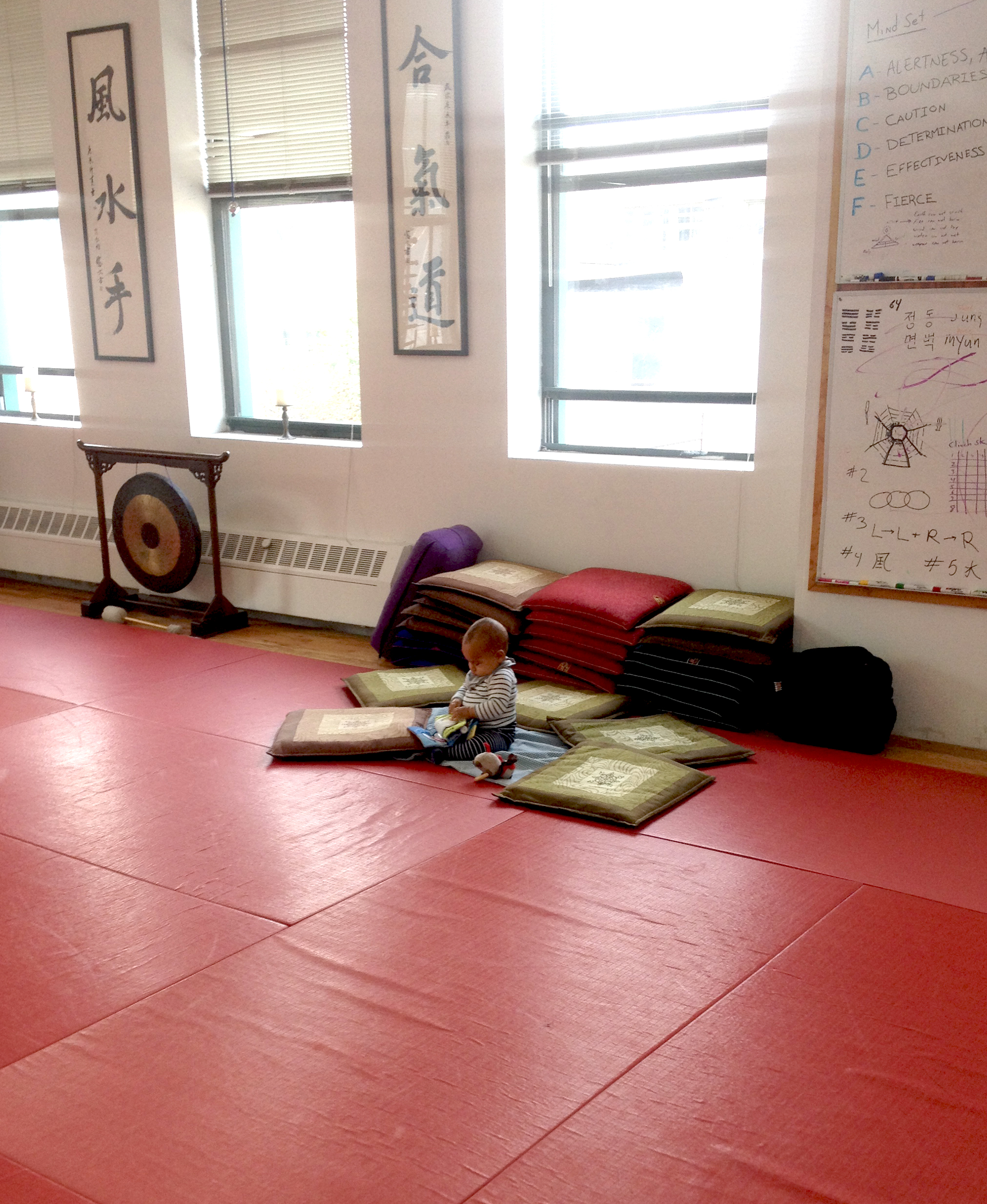
Look who came to visit! This little darling is Sunbai John Nafziger's son, and his name is Juniper Nanjul Wilkinson Bolevice Nafziger. According to John, Nanjul is his Tarok name, which is his mother's (John's) tribe in Nigeria, and means God's rest. Juniper is a red cedar which is a pioneering species; first to come back and flourish after floods, fires and other devastations. WOW! Welcome Juniper!
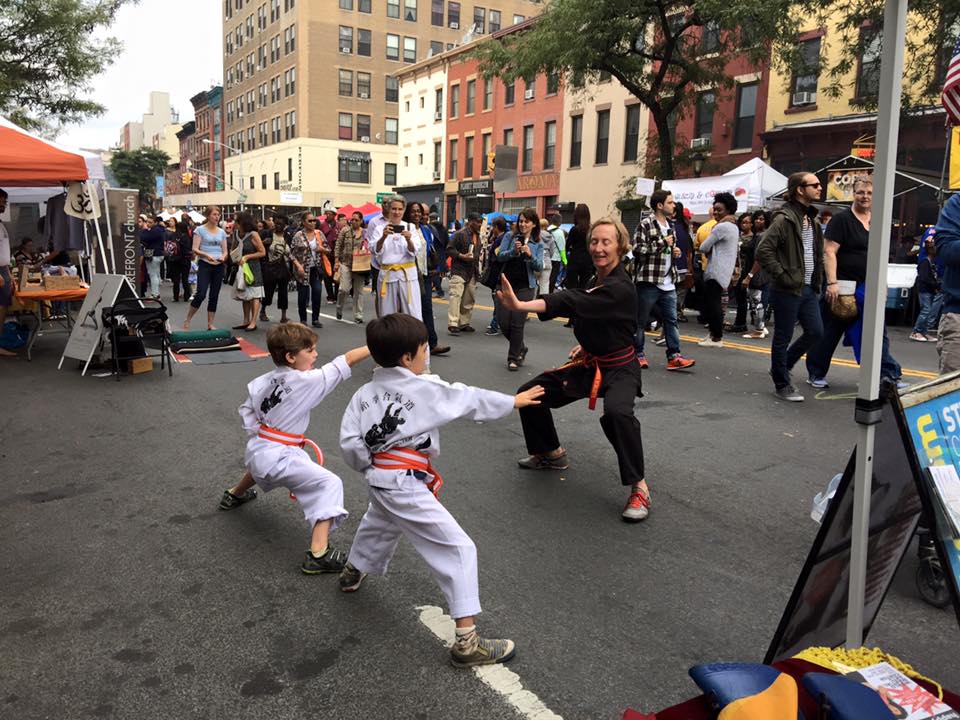
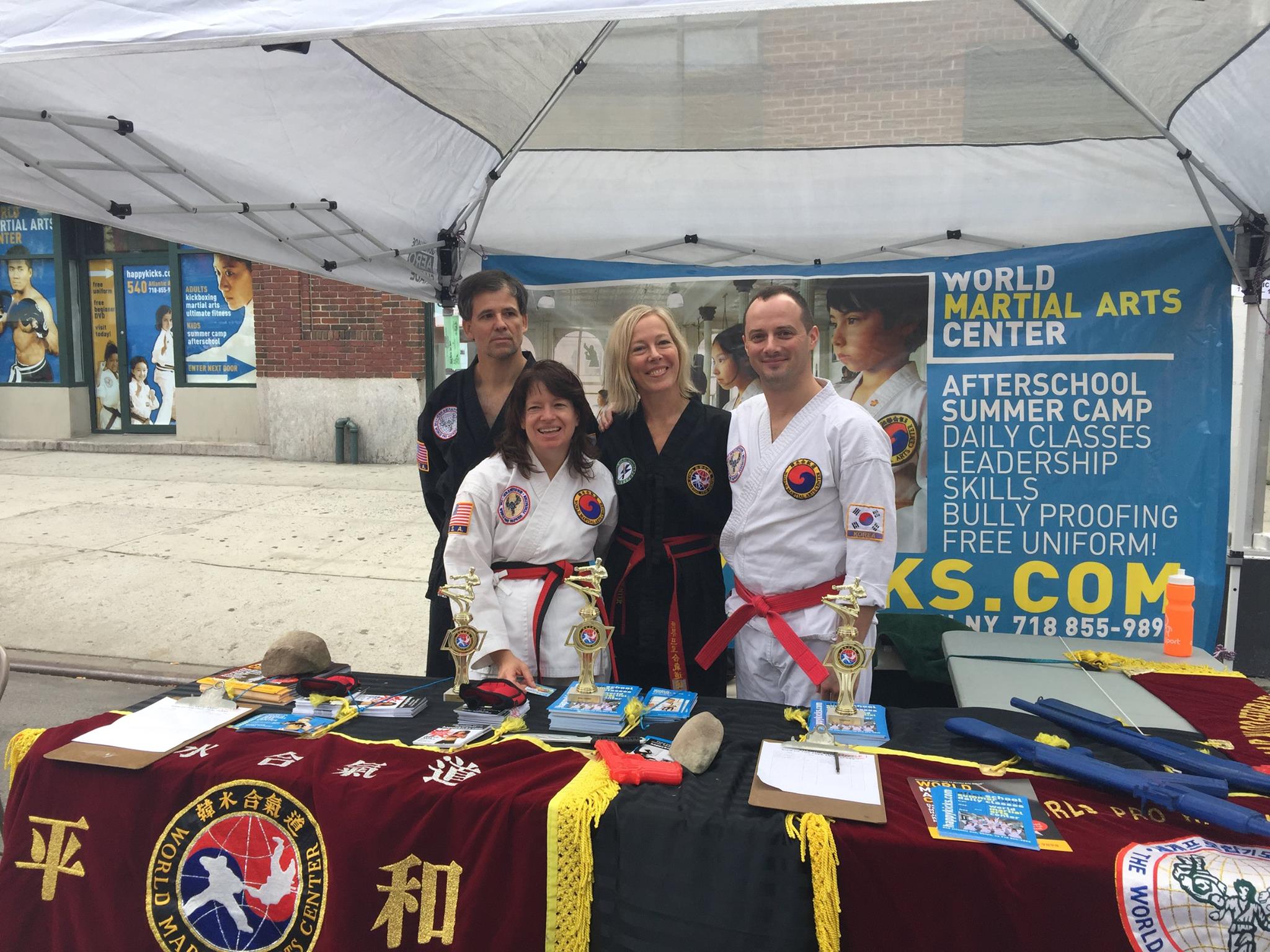
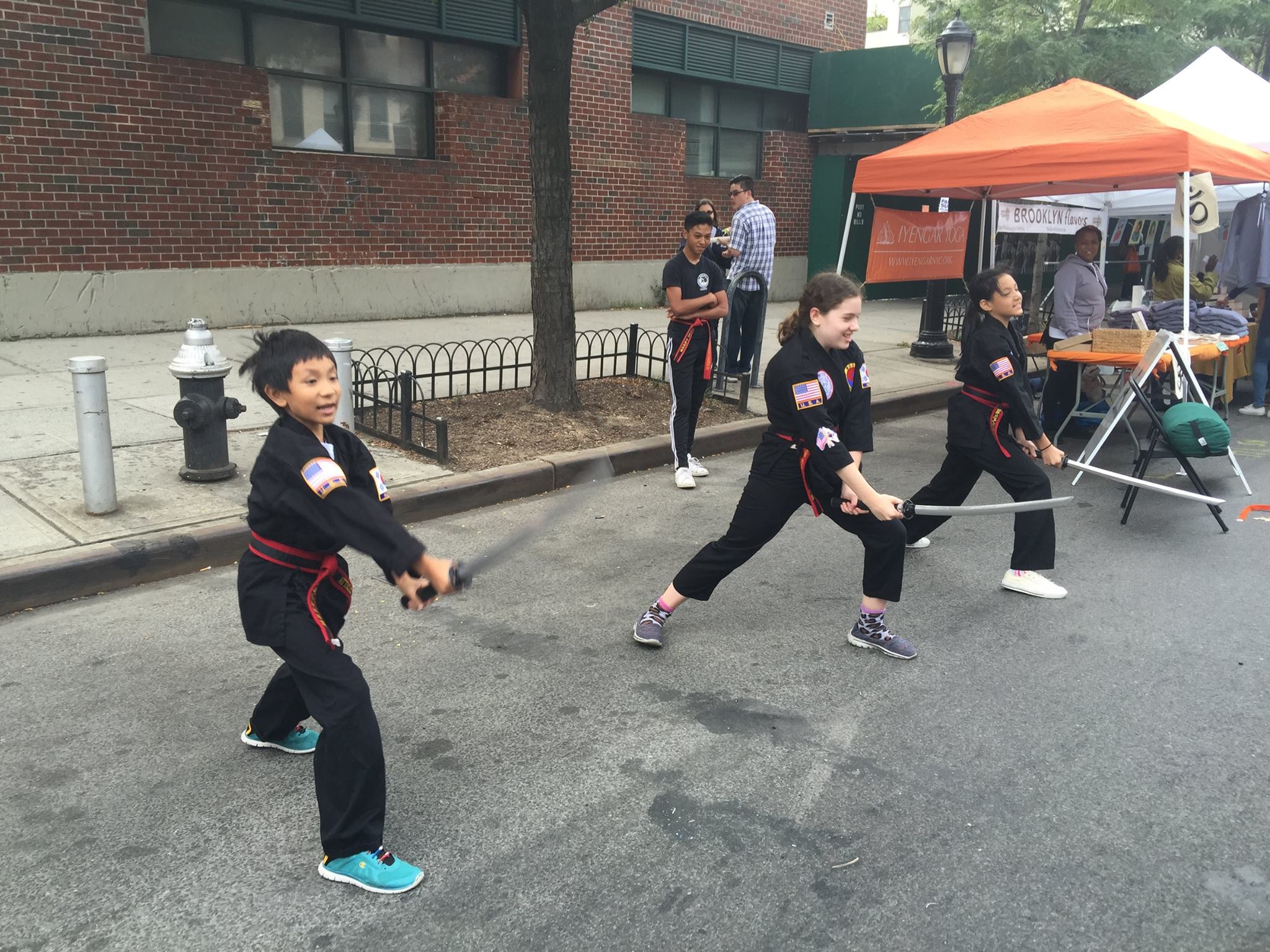
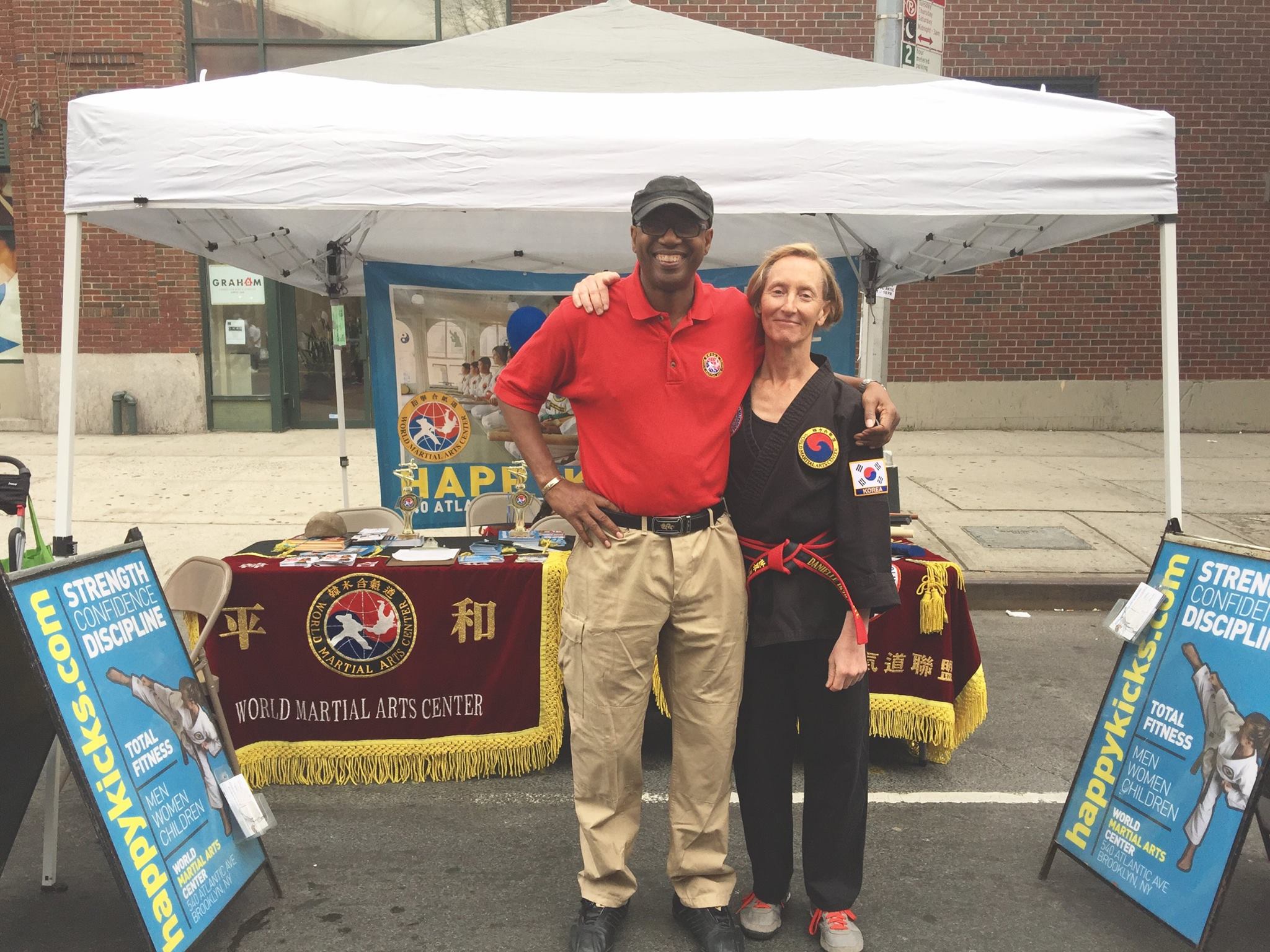
A big thanks to all who came out to help us promote our great school. This year's Atlantic Antic was wall to wall people, and we received more interest from people than any other year. An extra big thanks to Danielle Unchitelle for organizing the day, and non stop promoting from morning to evening!
Saying Goodbye to Jill by Betty
Blue Belt Amy Finkbeiner said it so perfectly on a FB comment: "Buffalo, those long cold winters may be a thing of the past, cuz a million-watt ray of pure sunshine is coming your way to stay. We'll all miss you so much, ChungSaNim Jill Burdick!" ChungSaNim Jill left this weekend with her family and moved back to her hometown of Buffalo. I don't think her absence has hit many of us yet; it will soon though. The list is long - the morning students who take her class; ChungSaNim Brad (she was always there to help out with the Saturday morning kids); all the young kids especially; all the other students who could count on a huge smile, positive and infectious energy from her and of course, most of all, Sabumnim who's been her master for 17 and half years.

Speaking for myself, Jill was an unbelievable dojang sister and friend, as my daughter said, in 8 year old parlance, she was one of my "besties". She was and is still so inspirational to me. She looked like a delicate, feminine flower, but she was tough as nails. During a sparring competition, Jill was the only woman who signed up for it, and as always, she brought her big self and kicked some serious butt. Looking back at some old photos, I realized she was the partner for 3 guys at three separate Black Belt demos (when they needed a partner for the demo). When someone was needed, Jill was always there.
I'll never forget that Warrior Weekend upstate when we were 7 months pregnant learning chil techniques from Sabumnim or doing Han Su at a demo in Union Square with our babies strapped to our chest. These are just a few of the many great memories I have with her, but the overarching one is of her as an incredibly loving, giving, kind woman as well as a fierce warrior who never gives up (and also has a wickedly fun sense of humor). Even after having two kids, and holding a job that routinely took her out of town, Jill attended seminar after seminar, warrior weekend after warrior weekend, year in and year out, always, of course with a smile and the best Mudo spirit around.
It's been an honor and pleasure to spend such a big part of my life with Jill and I know many others feel the same way as I do. She, in typical Jill fashion, has already volunteered to host a Warrior Weekend in Buffalo and extended invitations to all the students to visit her. Her presence and contributions to WMAC will never be forgotten. Hopefully, she will come to visit us once a year (hint, hint Jill :)). If there's one thing I know for sure is that if we channel even just a bit of Jill, we would all, not only be better martial artists, but we'd probably be brightening and inspiring someone in our lives.
Thirteen Ways of Looking at a Black Belt Demo WMAC Sunbae Danielle Uchitelle, member of the 2015 Black Belt Demo Coordination Team
l
Watching bodans training night after night Dragon, a children’s form adult’s determination, beginner’s mind.
ll
On the roof flaming boards, guttering, your kiyap so powerful the fire vanished.
lll
Sword form when wooden, a form when steel, a sword.
lV
Training with pain none can see performing with grace all can see a catch in your breathing only I can see.
V
I tell them that I will recognize the Grand Masters by the spirit in Grand Masters, surprise myself by recognizing Sabumnim’s mother.
Vl
Injury can’t stop you others stumble, you hop over.
Vll
Perfect balance empty mat empty mind teaming room silenced.
Vlll
The weapon you used for your staff form, red taped, is mine Now I’ll need to work harder not disappointing my weapons.
lX
Our security guard had never seen hapkido I can tell he now understands.
X
If I imagine myself doing this, I can do it. I can do it.
Xl
A beautiful form; I should learn it realizing I know it, realizing I should learn it.
Xll
Dojang group photos so many faces unknown to me Where are the bodans of yesteryear?
Xlll
They stood beside me as bodans they’ll stand beside me as Black Belts next will be our turn.

Feet to the Fire: Instructors Training at UMAC by Hak Seng
When I first heard about the Instructors Training being held at United Martial Arts Center (UMAC), I imagined it would be similar to past instructors seminars I had attended at the dojang: a combination of lecture, application exercises, and lots of writing in my notebook. They were always eye-opening and informative, and definitely helped when teaching a student, as well as for my own learning (of how to be a better student).
What I didn’t expect: to be exhausted by the end of what was almost 15 straight hours of training, and to learn way more than “how to be an instructor.” My notebook remained blank the entire time; no time to write. Our feet were thrown into the fire!
Here are my six key learnings (all of which are cultivated in our dojang):
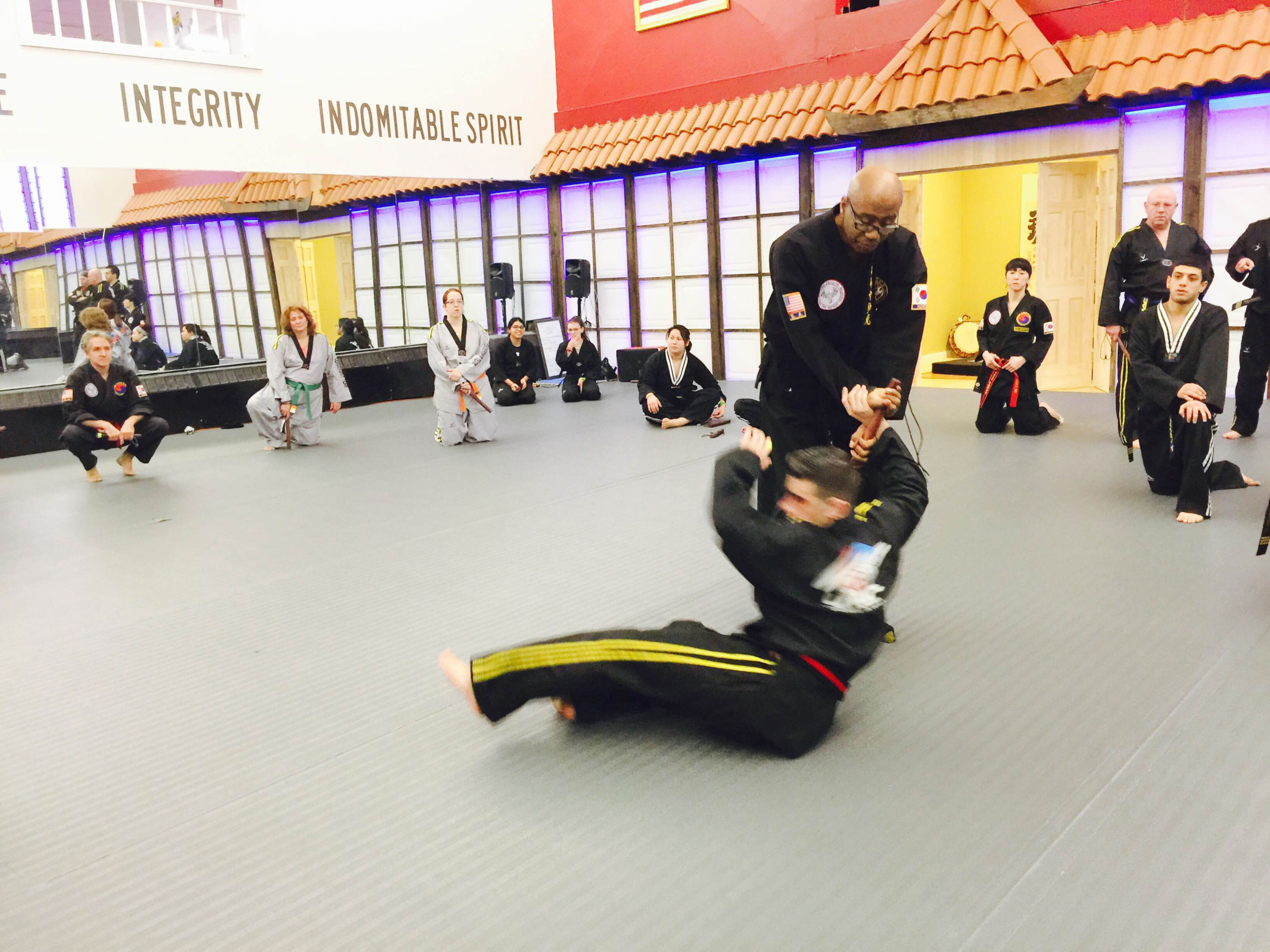
1. GO WITH THE FLOW I quickly let go of the expectation of doing a lot of sitting, listening, and writing notes when I saw different stations set up: calisthenics, sparring, and self-defense techniques. There were upwards of 60 students ranging in ages from likely 4 to 65 years, and ranks ranging from Master to white belt. No time to ask questions; the WMAC crew just dove in. After we moved from station to station, everyone came together to learn the rope stick form—even the children! From there, we had a session with Grandmaster Ciarfella of UMAC, who led a reflection exercise on personal development. We ended sometime after midnight and started the next day with sitting meditation at 6am, followed by more rope stick form and several defense applications. The beauty of not having any structured ‘breaks’ is that one really has no time to ‘think’ about what one is doing; we just go with the flow.
2. HAVE AN OPEN MIND Knowing that Sabumnim had provided a lot of support to UMAC, including curriculum and seminars, I expected that there would be some similarities. I also expected differences, e.g. the different environments (small town v. urban); each school is primarily based on distinct traditions (TaeKwonDo and HapKiDo), etc. The practice of an “open mind” (“beginner’s mind”) which is a critical part of our school—as cultivated by January White Belt Month—served me well by enabling me to observe, practice, and reflect on certain aspects of UMAC that differ from ours. In particular, during the session on personal development, I appreciated this new framework for developing personal goals. I was reminded of Sabumnim’s seminars—different styles, but ultimately the same outcome. Both Sabumnim and Grandmaster Ciarfella clearly understand the importance of internal transformation and having a sense of purpose in our martial arts training and in our overall lives. And both are indisputably invested in their students and creating optimal conditions so that each one of us can realize our fullest potential and power.
3. JUST DO IT How many of us have been on the mat and heard Sabumnim say “Just do what I say”? Don’t think. Don’t talk about it. Just do it. 24 hours before the training, I was told to bring my rope stick. I hadn’t practiced the form for a while, and didn’t have time to drill it. Despite some quick tips from the WMAC group before the training started, it was not enough to build my confidence but I figured I would be re-learning the form with the rest of UMAC students. To my surprise, I (and the rest of the WMAC crew) would be leading groups to drill the form. My group happened to be some of UMAC’s Black Belts and Masters…no time to think or have anxieties. I needed to lean in and just do it.
4. REPRESENT Though I had been to a past Warrior Weekend where we did some seminars with UMAC students, this was the first time that I really felt that I was ‘representing’ WMAC, Sabumnim, and my rank. I felt proud of the tremendous respect that UMAC showed Sabumnim, Kyosanims Betty and Jonathan, and the rest of us. There was a strong sense of fellowship. Whether it was when we were doing an insane number of various push-ups, delving into our personal goals until after midnight, rolling out of sleep to meditate at 6 am, or being called up to do rope stick form while UMAC students watched, we, WMAC students, represented our school and Sabumnim at every moment with mudo spirit! And the act of “representing” makes me feel more committed to WMAC and to my fellow students and instructors. My personal confidence also grew because Sabumnim trusted his students to lead these groups. His faith in me/us was a critical confidence boost.
5. LEARNING THROUGH DOING As is described in our student handbook, there are many ways of learning and many ways of teaching. To me, this training was an excellent model for learning to teach through ‘doing.’ Watching Sabumnim lead the full group in defense techniques or rope stick form, I was learning not only for my own training but also paying attention to ‘how’ he was teaching. When I was in my small group, I had the opportunity to apply immediately what I had learned. There’s an art and science to how Sabumnim teaches and this training gave me more focused time to practice.
6. THE POWER OF LOVE AND FAITH Another unexpected learning was witnessing the incredible power of love and faith in action. At the end of the training, Sabumnim called up Caleb, a young child who is physically challenged; he doesn’t have any arms. Pretending to be a schoolyard bully, Sabumnim began taunting Caleb who then knocked Sabumnim down by using his body and energy. And if that wasn’t convincing enough, Caleb did it a couple of more times! What struck me is that (a) Caleb embodies an incredible energy of love and light; you see it in his face, you feel it from his presence. This makes me think that he is being raised with a lot of love and care, and that UMAC is a loving and caring community; and (b) as we have heard Sabumnim say when he puts the yellow tip on a white belt, we have within us all the DNA that it takes to be a great martial artist. When watching Caleb, I saw (yet again) how Sabumnim is masterful in creating conditions to bring forth our inner power.
My gratitude for being part of WMAC deepened through this unique experience. Both on and off the mat, being with Sabumnim, Kyosanims Betty and Jonathan, and fellow practitioners reaffirmed that our dojang and UMAC are indeed extraordinary, and Sabumnim is a priceless gift.
by Kyosanim Betty

As 2015 begins, everyone turns to thoughts of the New Year and their hopes and dreams of what it may hold. While that's so important and vital for renewal; for me, 2014 was a turning point in my life and a year that will always hold much significance and remembrance because of the loss of my father. This especially hit home to me during the recent Black Belt test in which I participated. While the physical and mental part was, as always, challenging (and honestly, always quite fun), the spiritual part, especially during the time where we do our gratitude bows was especially meaningful to me, because of my recent loss. This had me thinking about my long (almost 18 years!) journey with Sabumnim and I think of how lost I was when I started. Though I was, on paper, fine (had general health, great education etc) there was a lack of meaningful connection with people and the world. I thanked Sabumnim after my dad's funeral because if not for Sabumnim and his gentle guidance through the years, I would not have had the healthy and loving relationship with my dad that I ended up having in the last years of his life. Sabumnim and the martial arts path, in essence, helped me with the tools to build the life that I wanted, have meaningful relationships, and become a good contributing member of society. I feel sad that there's a turning away from the traditional martial arts by the general public. The path towards peace lies in oneself through the focus on the internal as well as the external; through practices like meditation, the constant emptying of one's cup, sharing your knowledge in a humble way and an attitude of gratitude for what we have. The WMAC family is very lucky to have a safe and loving place to practice all of this. WMAC has been a gift to me and I am taking this opportunity to thank the universe for bringing it and Sabumnim, as well as Chungsanim, my husband Kyosanim Brad, and all my fellow martial artists into my life. May this be a year that we share joy, abundance and health with each other. With much love, Kyosanim Betty